
![From March 12 to 23, 38 Parkway School District Latin students and six chaperones journeyed across the Atlantic Ocean to visit Italy. Throughout the trip, students noticed an unusually high level of military presence at the sites they visited. “[It] seems like a lot of people are unhappy with our country’s current foreign affairs [and] foreign policy. I think that affects people's view [of] our country and our people as a whole. [We saw] signs [and] graffiti with anti-American sentiment. I think there's fear all over the world, and people don’t know what's going to happen next,” junior Jackson Stirling said.](https://pwestpathfinder.com/wp-content/uploads/2026/03/march-feature-revised--1200x675.png)
Prom. World War III. Graduation. As the end of the school year nears, our high school minds should be filled with thoughts of long-awaited, stereotypical high school events; instead, our lives have been interrupted by international tension and concerns for our own safety. War, which once felt distant and abstract, now feels immediate, raising a central question: how is war and global tension already shaping the lives of students here at home?
On Feb. 28, U.S. and Israeli forces launched coordinated missile strikes on multiple Iranian cities, including the capital and largest city, Tehran. This act of war demonstrates an escalation of decades of tension between the U.S. and Iran. One attack struck an elementary school in Iran’s Hormozgan Province, explained as a U.S. mapping error, and killed over 100 students. Government actions on both sides of the conflict demonstrate that youth are not protected; our peers are dying and we could be the next byproducts of international tension. Accordingly, recent polling shows young adults display higher levels of resistance and opposition toward the current fighting in Iran, with only 21% backing foreign attacks. However, opposition toward the war is not limited to the younger populations. In fact, a majority of Americans show disdain toward the handling and overall involvement of the United States in this latest bout of violence. Even so, vast public opposition toward recent military actions has not swayed President Donald Trump or the Department of Defense. This disconnect between public opinion and government action contributes to a growing sense of powerlessness among young people.
Feb. 27, a day before the initial February attacks, the Trump administration displayed frustrations after failed nuclear negotiations. Since these attacks, classified as Operation Epic Fury, Trump has laid out a variety of reasons for the attack, from nuclear capabilities to the need for regime change in the region, all of which he has claimed to have resolved, despite continuing to deploy troops to the region.
Societal Consequences
In response to these widespread attacks on their country, the Iranian military and its allies have struck back against multiple U.S. military bases across the Middle Eastern region. At the same time, the United States and Israel have not backed down, continuing to launch attacks on Iran. As of March 31, there have been over 3300 casualties across the region, 13 of those being American service members, and, as of March 23, over 300 casualties are children. In this alarming period of global conflict, the Trump administration has provided conflicting and misleading statements that are perpetuating fear and confusion in American citizens. On March 9, Trump stated that ‘the war is very complete,’ but a week later, on March 16, Trump commented before reporters at Air Force One, ‘Maybe we shouldn’t even be there.’ The uncertainty and lack of transparency from those in charge of the war leave the general American public anxious about the future of international order.
Young people are becoming especially fearful as rumors of a return to a 1960s-era military draft have begun to circulate via social media. While required enrollment in the United States Armed Forces in 2026 is unlikely, the Trump administration, however, has said, ‘no option has been ruled out.’ This means seniors at West High — like thousands of 18-year-olds around the country — must consider the possibility that their immediate plans for graduation, college or careers could be interrupted by military service.
From the 2022 Russian invasion of Ukraine to the continuously unfolding war in the Middle East between Iran and the United States and their Israeli allies, violence comparable to that of World War I and World War II feels more real than ever. In fact, some say we are closer than ever to — or even already in the early stages of — another massive global conflict that could scar society for years to come. For students, this growing instability transforms world news into something personal.
Campus connections
The current challenges associated with military service coincide with English teacher Daniel Barnes’ AP English Language and Composition class’s annual analysis of “The Things They Carried” by Tim O’Brien. The novel is a fictional account of soldiers in their late teens to early twenties as they fight in the Vietnam War. By analyzing and discussing the book, students are meant to gain a deep understanding of war and the mental, emotional and physical toll on young service members. Today’s global tensions reflect the journeys depicted by O’Brien, tying fictional literature to real-life fear and widespread uncertainty.
“For a lot of people here at Parkway West, the concept of war is so incomprehensible to students. We’re [currently] sending 2000 human beings over [to the Middle East]. Soldiers are not just a concept. They’re people,” Barnes said. “The whole reason I teach this book is to teach humanity and to have the students be able to empathize with soldiers and envision themselves in that position. It gets [really] scary when you hear those in charge discussing implementing the draft and knowing that those who would get drafted would look like my students and not look like my peers.”
While there is currently no indication of fighting expanding to U.S. soil, Americans are already seeing societal consequences due to tensions abroad. Because Iran, officially named the Islamic Republic of Iran, is a primarily Muslim country, Islamic individuals in St. Louis and throughout the U.S. are experiencing discrimination and Islamophobia.

Local prejudice
In early March, a local church displayed a message labeling Islam a “demonic religion.” The St. Louis community quickly denounced Life Church St. Louis’ problematic stance, distancing themselves from the local church’s extremist beliefs. The community’s disapproval led to the removal of the sign and the cancellation of church services the following week. Still, Islamophobia and discrimination, which have already been an experience common to Muslims, continue to persist in the face of the war abroad. At West High, there are many ethnic and religious affinity clubs, including the Muslim Student Association, to support its diverse student body. Junior Aminah Hilaly practices Islam and is a member of the club.
“I have faced [Islamophobia] from time to time, and it does take a toll on me because people don’t understand where [I’m] coming from. [Since the start of the war,] it’s gotten worse as things have happened [overseas], especially with the [church] sign. It does [scare me] because it’s somewhere that’s really close to home. A lot of the time, [violence] happens in our world, and the whole community [is blamed for it]. If something happens within the Muslim community, it’s not [every Muslim’s] fault. [Young people] get blamed for a lot of the things that have happened [before they were born]. [I hope people] actually realize that we are human at the end of the day and not just [names we are called] like ‘demonic,’” Hilaly said.
Exaggerating with the intent of causing fear and or the possibility for disaster, such as foreign nuclear attacks from Iran or deeming certain groups ‘terrorist groups’ is a tactic known as fear-mongering. This is not a new concept to the American people, and especially not to Muslim students. Fear-mongering often impacts societal attitudes toward certain groups of people, fueling discrimination. However, it can also promote nationalism and military service. In 2001, following the 9/11 terrorist attacks, nearly 200,000 Americans enlisted in the armed forces, showing an increased level of patriotism. At the same time, President George W. Bush, as Commander-in-Chief, saw a massive spike in his approval rating. On the contrary, persistent U.S. involvement in Iran has caused a sharp decline in support for Trump. Even many members of Trump’s Republican Party are not in favor of his recent military actions. Unlike the events of Pearl Harbor or 9/11, the Iranian war was started by a U.S. attack. Many Americans fail to see the U.S. Military’s justification for launching a foreign conflict, rather than protecting the American people by responding to a domestic attack.
Changes in service
Instead of inspiring military enrollment, these conflicts have created complications for recruits. Members of the younger generation who were planning to enroll in the armed forces before these conflicts are experiencing delays in the process. After the U.S Army’s recruiting successes in 2025, recent deployments directed by Trump and other changes in foreign affairs have shifted military priorities in several ways, including the pressure to train recruits faster.
“I was planning to sign my papers before spring break, but because of how the war has evolved, the training process has changed. I won’t be signing my papers until [around] June [or] July [because], with the need of people [currently], the military is trying to force people into training earlier and accept earlier times rather than later times, when I’m trying to go for a later time. [I will be] going to Georgia, I’ll do my basic training and then [I will have] another 16 weeks that I’ll train [for] infantry. They would want me to start earlier, but I’m going to wait so that way I can [finish high school],” senior Alexander Lewinski said.
Further, the U.S. military’s questionable actions in the Iranian conflict are creating a reluctance to serve in the military. Amid growing political polarization, many young people are unwilling to place themselves under leadership whose actions and principles they do not believe in.
“Everyone has their own political beliefs and the polarization of political parties definitely has caused more of a divide between people [thus] affecting people wanting to serve,” Lewinski said.
Conclusion
As the war in Iran heads into its fifth week of the initial four-five week timeline given by Trump on March 1, the future of the world still hangs in the air. Students at West High and in Iran alike see the chance for global unity being overshadowed by the possibility of violence and mass destruction.
“War is [not something] that anybody wants to happen, but it’s [become] an inevitable part of life. Its displacement and having to uproot your entire life and move somewhere to avoid conflict [impacts the younger generation]. Even people [who] aren’t aren’t involved directly in conflict [are impacted]. They see economic changes, for example, increasing gas prices [and other changes in] amenities. Immigration and asylum seeking [also] impacts their own communities,” Lewinski said.
![Days out from annual Advanced Placement (AP) exams, a pencil lies snapped in half, surrounded by a variety of study materials, symbolic of the frustrations accompanying end-of-year exams. AP exams are scheduled to run May 4 - 15, 2026. “I am taking three AP exams this year, [and] I only took one last year. [Last year,] I made sure I got a good rest before my exams; [this week,] I’ve been taking notes on each chapter [from my textbooks],” sophomore Shree Sikkal Kumar said.](https://pwestpathfinder.com/wp-content/uploads/2026/04/DSC9826-1200x798.jpg)
![Students at West High and beyond have shown their commitment to act for change, rather than remaining as passive observers. Yet, along with student activism, the student journalists covering these controversial issues have faced censorship from the government and other institutions. Pathfinder continues to strive to report on difficult topics and provide a platform of information and conversation at Parkway West. Journalism adviser Lindsey Katz teaches about the First Amendment and the rights of student journalists as one of the lessons in Convergence Journalism 1. “Out of all the things we learn in journalism, the takeaway that I want journalists to walk away with the most is having a true understanding of their rights as citizens and their rights as student journalists. By studying the First Amendment, media law and students’ rights, [journalists can] build foundational knowledge of why we do what we do,” Katz said.](https://pwestpathfinder.com/wp-content/uploads/2026/02/feb-2026-feature-1200x678.png)
![Justice. Domestic Tranquility. General welfare. Blessings of liberty. These key phrases have been redacted from this copy of the U.S. Constitution, reflecting the values lacking in the United States' Immigration and Customs Enforcement (ICE). ICE’s behavior suggests that the values instilled in our nation have been stripped. “When you're implementing [immigration enforcement] on a mass scale at the speed it's happening [now], you're bound to see unjust, horrible things. The only way to solve that is to make the crackdowns less severe,” junior Alisha Yin said.](https://pwestpathfinder.com/wp-content/uploads/2026/01/feature-image-jan-2026-1200x710.png)
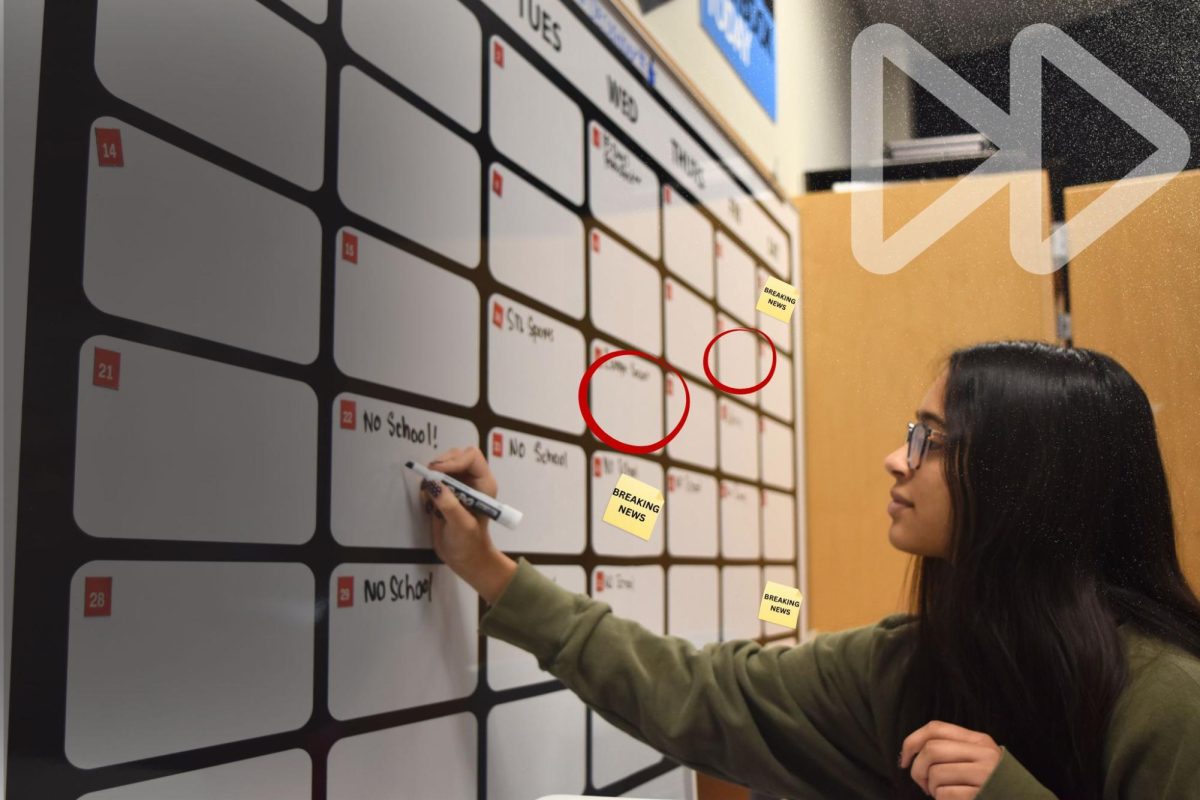
![Helping to transport cans and other food items from West High’s food drive to the Parkway Food Pantry, sophomore Max Jones carries a box into a truck. Nov. 21 marked the end of West High’s annual canned food drive. “The food drive is a really great opportunity for everyone to get involved in helping a bigger cause. It’s great that [the West community] can make a difference in a big way through this food drive,” Jones said.](https://pwestpathfinder.com/wp-content/uploads/2025/11/DSC_0727-1200x798.jpg)
![Dressed up as the varsity girls’ tennis coach Katelyn Arenos, senior Kate Johnson and junior Mireya David hand out candy at West High’s annual trunk or treat event. This year, the trunk or treat was moved inside as a result of adverse weather. “As a senior, I care less about Halloween now. Teachers will bring their kids and families [to West’s Trunk or Treat], but there were fewer [this year] because they just thought it was canceled [due to the] rain. [With] Halloween, I think you care less the older you get,” Johnson said.](https://pwestpathfinder.com/wp-content/uploads/2025/10/DSC00892-1-1200x800.jpg)
![Leaning on the podium, superintendent Melissa Schneider speaks to Parkway journalism students during a press conference. Schneider joined Parkway in July after working in the Thompson School District in Colorado. “My plan [to bond with students] is to get things on my calendar as much as possible. For example, being in [classes] is very special to me. I am trying to be opportunistic [meeting] kids [and] being in [the school] buildings. I have all the sports schedules and the fine arts schedules on my calendar, so that when I'm available, I can get to them,” Schneider said.](https://pwestpathfinder.com/wp-content/uploads/2025/09/IMG_5425-1200x943.jpeg)

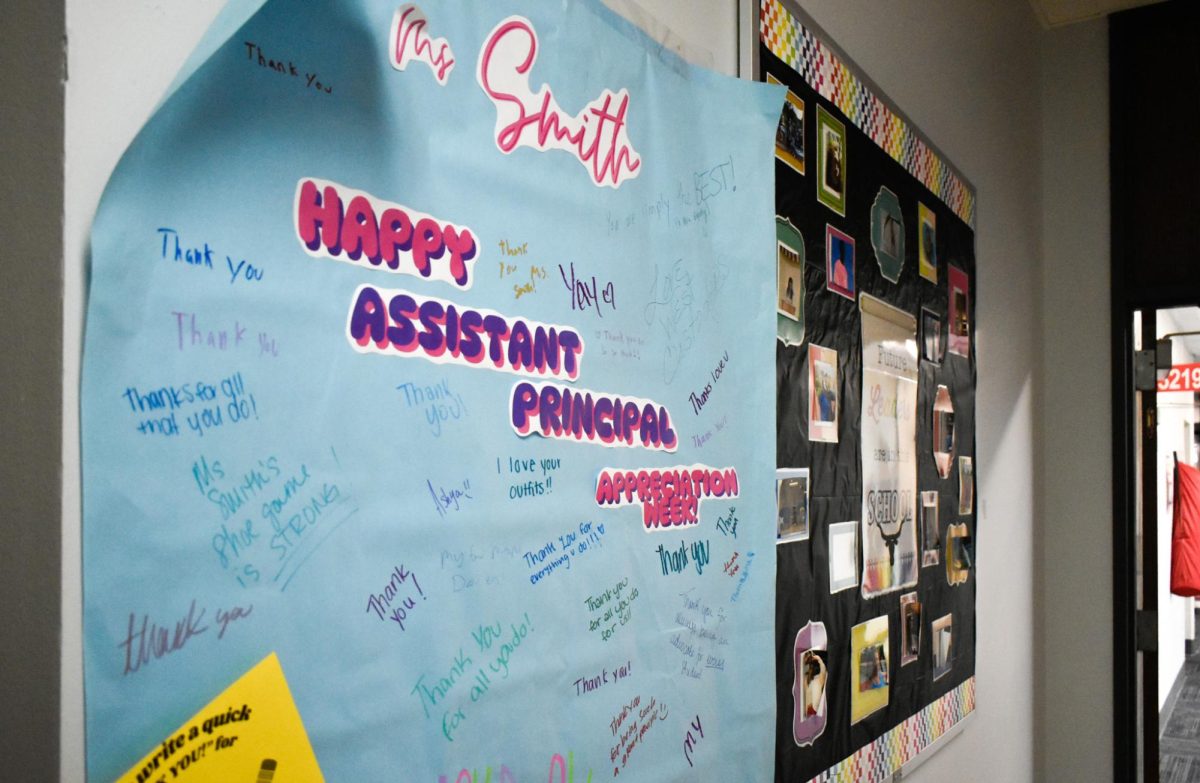
![Red, white and blue, the American flag holds the values of our democracy. The fight that we once endured has returned, as student journalists and senior correspondents across the country are losing their voices due to government control. “[Are] the White House and [the] government limiting free speech [and] freedom of the press? Yes [they are],” chief communications officer of the Parkway School District and former journalist Elisa Tomich said.](https://pwestpathfinder.com/wp-content/uploads/2025/03/Untitled-design-14.jpg)
![Takeout containers and boxes sit unused in the garage of senior Yein Ahn. Her family’s sushi restaurant, 153 Sushi, went out of business in March 2024. Like many restaurants, Ahn’s family experienced the struggle of the restaurant business amidst the lasting economic effects of the COVID-19 pandemic. Business teacher Andy Croley has been teaching his classes about these modern challenges restaurants face trying to adapt to the rapidly changing economy and market. “[The food industry is] super competitive. There are restaurants everywhere you go, so they have to figure out what niche they're going to fill. Then, just like us as consumers, right now at home, where our prices are going, prices [for restaurants] are continuously going up as well. Inflation would definitely be a factor for people as well, because with inflation, [restaurants] are also seeing rising costs in their lease or their rent, electricity and all across the board,” Croley said.](https://pwestpathfinder.com/wp-content/uploads/2026/05/DSC_0004-1200x800.jpeg)
![Laughing, sophomore Julia Adams (right) takes time from her day to let loose and hang out with her friends. Adams, who has received lessons from Parkway’s Peers Advocating for Total Health (PATH) program, has maintained the status of being alcohol free. “Playing sports, [and] being surrounding myself with friends who encourage each other to [not drink] is [not only] helpful, [but] doing these activities is super fun and helps me reach a natural high,” Adams said.](https://pwestpathfinder.com/wp-content/uploads/2026/03/DSC_0029-1200x800.jpg)

![The narrow lens contrasts with a diverse reality; whitewashing means altering or concealing something to make it more appealing to white people. The word “whitewashed” as it is used today has caused identity crises for thousands, if not millions, of students. “I have been called whitewashed before, and it feels very sad. [It’s] just hard because it makes me not know who I am. You don’t get a lot of backlash for [saying it], so I think it’s a throwaway term for people who aren’t affected by it. When you are the person [who] is being called whitewashed, over time, it builds up,” sophomore Raaga Golla said.](https://pwestpathfinder.com/wp-content/uploads/2026/01/IMG_5740-1-1200x800.jpg)
![Reflecting on the hallway artwork titled “Community and Connections,” junior Trent Young is inspired by the unity and belonging showcased at school. This painting was created in 2014 to represent West's diverse population.“Seeing someone of color, [Zohran Mamdani], succeed in politics makes me realize I belong here. It inspires me to get involved within my community [to] make a difference,” Young said.](https://pwestpathfinder.com/wp-content/uploads/2026/01/DSC_0002-1200x800.jpg)
![Playing an informative video about DECA competitions, sophomore Eiley Minich leads the first DECA meeting of the year. Like Minich, senior Tenley Dollarhide is a member of DECA. “I think [DECA is ] important because they provide good personal experiences that relate to your career. I want to do business so I can get actual experience in doing marketing projects, competing with other business students [and] presenting things with an actual business person as a judge. I think it's important to make them more inclusive, because we want to have a diverse population. You need people with different perspectives to bring their perspectives to the table and talk about what people like them they need,” Dollarhide said.](https://pwestpathfinder.com/wp-content/uploads/2025/12/DSC_1446-2-1200x795.jpg)
![During Creative Writing, senior Michael Collop experiments with different poetry styles. For Collop, the class feels like a break from the fast pace of his other courses. “[There is] no stress,” Collop said. “It's definitely a lot more laid back [than an AP class], and it's enjoyable. It's probably one of my favorite classes.”](https://pwestpathfinder.com/wp-content/uploads/2025/12/DSC_4545-1-1200x800.jpg)

![Amid major global conflicts, anonymous social media critics hone in on celebrities, especially female celebrities, every move. Taylor Swift's latest album release and accompanying press tour displayed the uncontrollable growth of cancel culture and the comfort anonymity on social media has created. “[Cancel culture] can be very effective when [it’s used to] speak out against a [person] or a corporation where [you] use your voice or your dollar as a way to send a message about what we accept as a society. [However,] we've really blurred this line where we expect [everyone] to cater to have a belief about every issue. Not one person is going to believe every single thing that you believe as strongly as you believe it," English teacher Michelle Kerpash said.](https://pwestpathfinder.com/wp-content/uploads/2025/11/DSC_7626-1-1200x800.jpg)
![Sitting courtside before a junior varsity girls’ tennis match, senior Tanisi Saha rushes to finish her homework. Saha has found herself doing academic work during her athletic activities since her freshman year. “Being in sports has taught me how to stay organized and on top of my schoolwork. [With] a busy practice and game schedule, I’ve learned to manage my homework and study time better,” Saha said.](https://pwestpathfinder.com/wp-content/uploads/2025/11/DSC_0022-1200x800.jpg)
Will Gonsior • Apr 1, 2026 at 5:41 pm
I love the article body and think it does a great job making this relevant to Parkway West. That said, the uncited timeline leaves a lot to be desired in my opinion. Pahlavi was, pretty objectively, not a western puppet; he was one of the most powerful middle eastern heads of state who, though an American ally, occasionally butted heads with the west and engineered the 1970s oil shock to generate a windfall for Iran at the expense of the US. Pahlavist Iran was a regional hegemon too powerful to be controlled by one superpower. Context is given for why the IR rose to power but not for why the US has always been so against them — namely, the fact that they’re terrible rulers, far more repressive than the Pahlavi regime. If we’re attributing logic to the response to 9/11 it should be pointed out that an invasion of Iran would have been scarcely less logical at the time than an invasion of Saddam Hussein’s more pro-stability and equally not complicit Iraq. If we’re pointing out that Khomeini was exiled for being a dissident and people resented Shah rule it’s worth pointing out that Qassem Soleimani was the world’s most effective organizer of terrorism, or that reasonable ballpark figures tell us that 1/15 as many Iranians have died from conflict in March as compared to conflict in January. When we weren’t at war with Iran. When the regime carried out a massacre.
We shouldn’t be there. Very little in this article is unfair to the United States. But by only using an American lens, I would contend it is unfair to the people and history of Iran.