![Justice. Domestic Tranquility. General welfare. Blessings of liberty. These key phrases have been redacted from this copy of the U.S. Constitution, reflecting the values lacking in the United States' Immigration and Customs Enforcement (ICE). ICE’s behavior suggests that the values instilled in our nation have been stripped. “When you're implementing [immigration enforcement] on a mass scale at the speed it's happening [now], you're bound to see unjust, horrible things. The only way to solve that is to make the crackdowns less severe,” junior Alisha Yin said.](https://pwestpathfinder.com/wp-content/uploads/2026/01/feature-image-jan-2026-1200x710.png)
“[No state] shall deprive any person of life, liberty, or property, without due process of law; nor deny to any person within its jurisdiction the equal protection of the laws.” This is a matter of our security and dignity.
“[E]ven one whose presence in this country is unlawful, involuntary, or transitory is entitled to that constitutional protection.” This is a matter of our civil rights.
For over a century, these quotes, from The 14th Amendment of the U.S. Constitution and a 1903 Supreme Court Case, respectively, have been accepted as law. More than the law, however, they have guided individual lives and expanded our freedoms. Despite a clear understanding of these ideals, the fundamental integrity of these promises is becoming progressively ambiguous.
The Department of Homeland Security’s (DHS) federal agency, Immigration and Customs Enforcement (ICE), has been tasked with identifying, arresting and deporting individuals who have violated U.S. immigration laws. In recent months, President Donald Trump initiated and signed several executive orders, including the controversial Protecting the People Against Invasion order, which directs the DHS to implement aggressive nationwide immigration crackdowns. The DHS agenda includes a goal of 3,000 arrests per day, 10,000 new agents, and 75 billion in funding.
This Jan. 20 executive order made clear punishments, resources and policy promises that would impact “illegal aliens” and ordinary citizens alike. Beyond those who are deported, neighbors and allies have been deeply affected by ICE activity. Since Trump took office, ICE efforts have intensified and expanded into cities with major immigrant populations. It is evident that Trump intends to keep his promise to “begin the largest deportation operation in the history of our country.” Already in the past year, there have been over 605,000 deportations, and more than 2.5 million undocumented immigrants have left the nation’s borders, both voluntarily and by force.
With ICE’s bold presence, critics have raised concerns about transparency, oversight and the balance between federal authority and trust throughout communities. Issues of deceptiveness have stemmed from ICE and other DHS agents’ frequent use of masks and face coverings — a method of concealing their identities. While DHS has alleged that coverings protect against doxing, this is concerning to the public, who, as Chicago Mayor Brandon Johnson acknowledged, deserve to know the identities of officers performing public duties. ICE has also been deemed violent by critics on social media, often using excessive force when detaining individuals. Agents have been entering homes without proper protocol. Their actions have contributed to a deep culture of violence that has shocked individuals nationwide.
Tensions have intensified with the murder of U.S. citizen Renee Nicole Good on Jan. 7 and the killing of ICU nurse and U.S. citizen Alex Pretti, an employee of the U.S. Department of Veterans Affairs, on Jan. 24 — both events occurred in Minneapolis. While Minneapolis has become a hotspot of ICE activity, it has also inspired thousands of protestors to partake in peaceful demonstrations. In St. Louis, protests have attracted crowds of over 800 people. On Jan. 30, St. Louisans and individuals nationwide took part in one of the largest demonstrations so far, dubbed “Ice Out of Everywhere.” Individuals refrained from attending work, school and avoided shopping to create a ‘national shutdown’ of the economy. The grassroots 50501 Movement, which also organized the popular “No Kings Protest” on June 14, 2025, played a major role in facilitating January 30th’s vigils, demonstrations and strikes.
Even though St. Louis has not experienced immigration crackdowns of the same magnitude as other states, it is clear that St. Louis residents believe that escalated federal immigration enforcement and the violence that comes with it are not wanted. ICE was recently permitted to enter homes of suspected undocumented immigrants without a judicial search warrant — a clear constitutional violation of the Fourth Amendment and counterintuitive to the enforcement promised by ICE.
Raids are becoming triggered by racial profiling rather than confirming the status of an undocumented person. Now, fear has taken hold of lives, discouraging people of color from reporting crimes, going to work, or even seeking medical care, as they fear for their safety. Local economies feel the strain as immigrant-owned businesses have started to lose customers, employees, or close entirely.
St. Louisans have strongly opposed ICE activity because of their diverse backgrounds. According to a U.S. Census survey, around 24,000 foreign-born residents live in the St. Louis metropolitan area, representing a broad mix of countries, cultures and communities. For a city as vibrant as St. Louis, a large-scale immigration crackdown would mean empty classroom seats, shuttered doors of immigrant-owned businesses and ultimately, the eroded trust between neighbors and the state. When the fear of being deported outweighs students’ ability to receive an education, get proper medical care, or make a living, the fundamental safety and character of a city are eaten away. St. Louis has historically been a city built up by refugees and immigrants. If we allow national rhetoric to dismantle our local communities, we will lose the diversity that defines the greater St. Louis area.
Even without a strong presence like other U.S. cities, ICE has conducted raids in the St. Louis area since Trump made a promise to send immigration enforcement to St. Louis. For students in the St. Louis region, the possibility of a large-scale ICE crackdown is not a distant political threat but rather one that reaches directly into their daily lives. Schools are meant to be places of stability and safety, but national immigration policies have the power to disrupt that sense of security. When students are unsure whether their parents, relatives, or friends could be detained, the impact extends beyond individual households and into the broader school community.
“Especially in certain school communities, I could certainly see that [immigration enforcement] impacts kids going to school because families are scared that ICE can target kids outside of schools and people outside of churches. I know here at Parkway West, we have a decent-sized immigrant community. I know there are communities here in St. Louis [where] that could really impact their lives,” Challenges to Democracy teacher Kristen Collins said.
Ultimately, policy is not just about the laws written out by the government. Policy is a reflection of the views and priorities of an administration and its most vocal supporters. As the debate about immigration management unfolds from the halls of Washington D.C. to the streets of St. Louis, we as a country must decide if we are a community that supports the violence of other human beings or one that supports the safety and dignity of every resident, regardless of where they come from. In the end, the strength of the nation will not be found in how many people we can push out, but rather in how we can embrace and protect individuals venturing to the land of the free and those who have already made it.
![Days out from annual Advanced Placement (AP) exams, a pencil lies snapped in half, surrounded by a variety of study materials, symbolic of the frustrations accompanying end-of-year exams. AP exams are scheduled to run May 4 - 15, 2026. “I am taking three AP exams this year, [and] I only took one last year. [Last year,] I made sure I got a good rest before my exams; [this week,] I’ve been taking notes on each chapter [from my textbooks],” sophomore Shree Sikkal Kumar said.](https://pwestpathfinder.com/wp-content/uploads/2026/04/DSC9826-1200x798.jpg)
![From March 12 to 23, 38 Parkway School District Latin students and six chaperones journeyed across the Atlantic Ocean to visit Italy. Throughout the trip, students noticed an unusually high level of military presence at the sites they visited. “[It] seems like a lot of people are unhappy with our country’s current foreign affairs [and] foreign policy. I think that affects people's view [of] our country and our people as a whole. [We saw] signs [and] graffiti with anti-American sentiment. I think there's fear all over the world, and people don’t know what's going to happen next,” junior Jackson Stirling said.](https://pwestpathfinder.com/wp-content/uploads/2026/03/march-feature-revised--1200x675.png)
![Students at West High and beyond have shown their commitment to act for change, rather than remaining as passive observers. Yet, along with student activism, the student journalists covering these controversial issues have faced censorship from the government and other institutions. Pathfinder continues to strive to report on difficult topics and provide a platform of information and conversation at Parkway West. Journalism adviser Lindsey Katz teaches about the First Amendment and the rights of student journalists as one of the lessons in Convergence Journalism 1. “Out of all the things we learn in journalism, the takeaway that I want journalists to walk away with the most is having a true understanding of their rights as citizens and their rights as student journalists. By studying the First Amendment, media law and students’ rights, [journalists can] build foundational knowledge of why we do what we do,” Katz said.](https://pwestpathfinder.com/wp-content/uploads/2026/02/feb-2026-feature-1200x678.png)
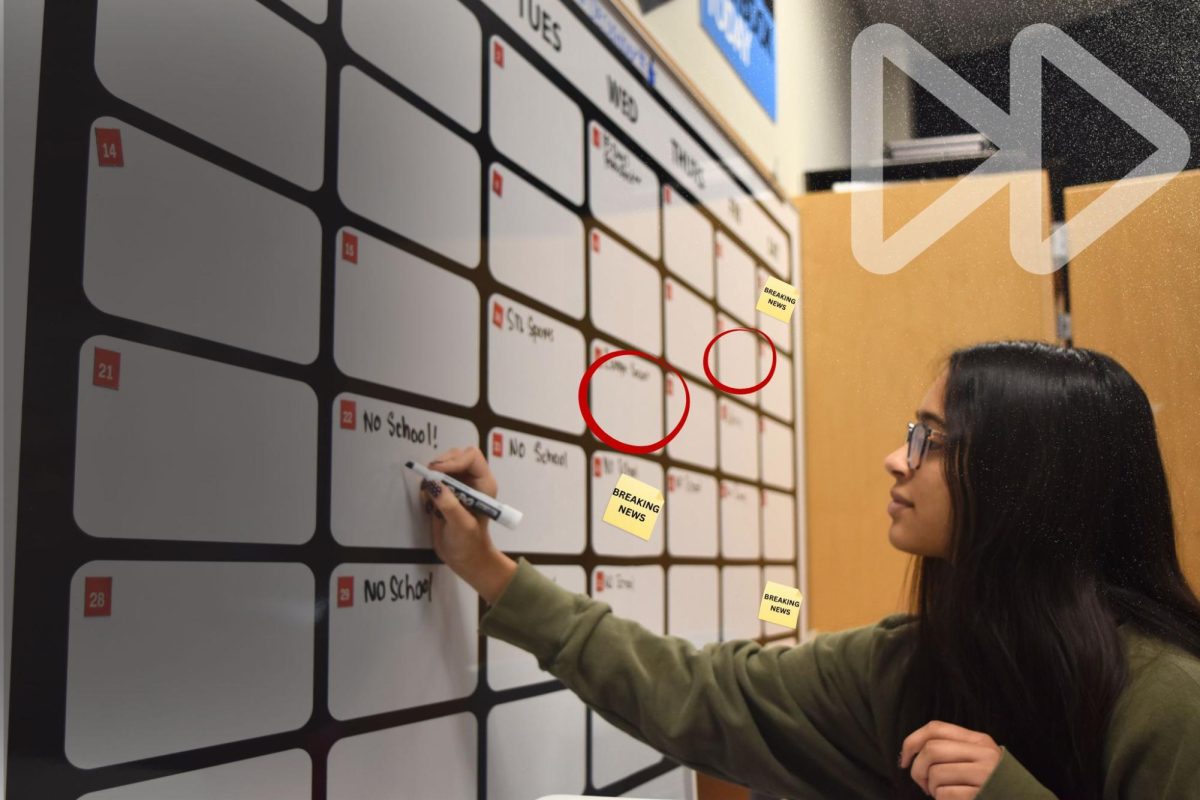
![Helping to transport cans and other food items from West High’s food drive to the Parkway Food Pantry, sophomore Max Jones carries a box into a truck. Nov. 21 marked the end of West High’s annual canned food drive. “The food drive is a really great opportunity for everyone to get involved in helping a bigger cause. It’s great that [the West community] can make a difference in a big way through this food drive,” Jones said.](https://pwestpathfinder.com/wp-content/uploads/2025/11/DSC_0727-1200x798.jpg)
![Dressed up as the varsity girls’ tennis coach Katelyn Arenos, senior Kate Johnson and junior Mireya David hand out candy at West High’s annual trunk or treat event. This year, the trunk or treat was moved inside as a result of adverse weather. “As a senior, I care less about Halloween now. Teachers will bring their kids and families [to West’s Trunk or Treat], but there were fewer [this year] because they just thought it was canceled [due to the] rain. [With] Halloween, I think you care less the older you get,” Johnson said.](https://pwestpathfinder.com/wp-content/uploads/2025/10/DSC00892-1-1200x800.jpg)
![Leaning on the podium, superintendent Melissa Schneider speaks to Parkway journalism students during a press conference. Schneider joined Parkway in July after working in the Thompson School District in Colorado. “My plan [to bond with students] is to get things on my calendar as much as possible. For example, being in [classes] is very special to me. I am trying to be opportunistic [meeting] kids [and] being in [the school] buildings. I have all the sports schedules and the fine arts schedules on my calendar, so that when I'm available, I can get to them,” Schneider said.](https://pwestpathfinder.com/wp-content/uploads/2025/09/IMG_5425-1200x943.jpeg)

![Red, white and blue, the American flag holds the values of our democracy. The fight that we once endured has returned, as student journalists and senior correspondents across the country are losing their voices due to government control. “[Are] the White House and [the] government limiting free speech [and] freedom of the press? Yes [they are],” chief communications officer of the Parkway School District and former journalist Elisa Tomich said.](https://pwestpathfinder.com/wp-content/uploads/2025/03/Untitled-design-14.jpg)
![Senior Michael Collop stands in the sun at Vlasis Park in Ballwin, Mo. Collop has earned each of the 142 merit badges currently offered by Scouting America, joining the estimated 650 other Scouts who have done the same. Out of roughly 130 million youth who have participated in Scouting, only 0.00077% have achieved this distinction. “The whole point of merit badges is to learn something from them and get a glimpse into every single career or every aspect of [Scouting]. I think I took something from each one of those merit badges that's [going to] be with me for the rest of my life,” Collop said.](https://pwestpathfinder.com/wp-content/uploads/2026/04/DSC7392-1200x798.jpg)
![West High’s girls’ and boys’ track and field school records are plastered next to the gymnasium entrance. In 2023, the girls’ varsity 4x200-meter relay team set a school record — the most recent track and field school record. “[My] freshman year, we almost made it to state. We made it to sectionals but came up short by 0.79 seconds from advancing,” Love said.](https://pwestpathfinder.com/wp-content/uploads/2026/04/DSC_1232-1-1200x800.jpg)


![Amid major global conflicts, anonymous social media critics hone in on celebrities, especially female celebrities, every move. Taylor Swift's latest album release and accompanying press tour displayed the uncontrollable growth of cancel culture and the comfort anonymity on social media has created. “[Cancel culture] can be very effective when [it’s used to] speak out against a [person] or a corporation where [you] use your voice or your dollar as a way to send a message about what we accept as a society. [However,] we've really blurred this line where we expect [everyone] to cater to have a belief about every issue. Not one person is going to believe every single thing that you believe as strongly as you believe it," English teacher Michelle Kerpash said.](https://pwestpathfinder.com/wp-content/uploads/2025/11/DSC_7626-1-1200x800.jpg)
![Sophomore Shree Sikkal Kumar serves the ball across the court in a match against Lindbergh. Sikkal Kumar has been a varsity member of the varsity girls’ tennis team for two years, helping her earn the number two rank in Class 2 District 2.“When matches are close, it’s easy to get nervous, but I [ground] myself by[staying] confident and ready to play,” Sikkal Kumar said.](https://pwestpathfinder.com/wp-content/uploads/2025/11/DSC2801-1200x798.jpg)
![Focused on providing exceptional service, sophomore Darsh Mahapatra carefully cleans the door of a customer’s car. Mahapatra has always believed his customers deserve nothing less than the best. “[If] they’re trusting us with their car and our service, then I am convinced that they deserve our 100 percent effort and beyond,” Mahapatra said.](https://pwestpathfinder.com/wp-content/uploads/2025/10/DSC_0018-1200x800.jpg)
![Sophomore Aleix Pi de Cabanyes Navarro (left) finishes up a soccer game while junior Ava Muench (right) warms up for cross country practice. The two came to Parkway West High School as exchange students for the 2025-2026 school year. “The goal for the [exchange] program is to provide opportunities for both Parkway students and our international exchange students to learn about other cultures, build connections and become confident, capable, curious and caring — Parkway’s Four C’s — in the process,” Exchange Program Lead Lauren Farrelly said.](https://pwestpathfinder.com/wp-content/uploads/2025/10/Feature-Photo-1200x800.png)