
![Helping to transport cans and other food items from West High’s food drive to the Parkway Food Pantry, sophomore Max Jones carries a box into a truck. Nov. 21 marked the end of West High’s annual canned food drive. “The food drive is a really great opportunity for everyone to get involved in helping a bigger cause. It’s great that [the West community] can make a difference in a big way through this food drive,” Jones said.](https://pwestpathfinder.com/wp-content/uploads/2025/11/DSC_0727-1200x798.jpg)
A golden turkey glistens under the warm glow of overhead lights, steaming mashed potatoes sit next to a warm bowl of gravy, and pumpkin pie waits, cooling off to the side. Family members are gathered, laughing and sharing stories while enjoying the delicious feast. While this Thanksgiving scene may seem familiar to many, families across America struggle for a meal, many without the luxury of a Thanksgiving celebration.
Resulting from a Congress unable to pass spending bills, Oct. 1 to Nov. 12 marked the longest government shutdown in American history. This resulted in 42 million Americans—including one in five residents of St. Louis, MO.—losing their Supplemental Nutrition Assistance Program (SNAP) benefits. SNAP provides federally funded nutrition benefits to low-income families and individuals with limited resources. This includes people who work part-time jobs or are unemployed, households with children, seniors and those with disabilities. A longstanding and effective program, SNAP ran out of funding nearly a month into the shutdown, impacting every state in a different way. Sickeningly, in Missouri, 650,000 people lost their SNAP benefits in November. Parkway Food Pantry founder and lead mental health specialist at West High Diane Peterson has focused her efforts on those dealing with food insecurity through her role.
“Not only is it stressful to not know if you’re going to have enough food when you go home after school, but the physical sensation of hunger is considered a form of pain. We tend to think of pain as [something like] a broken bone, but feelings of hunger are actually a form of pain. People who are chronically hungry are also in chronic pain, which is very distracting,” Peterson said.
Without the essential resources of SNAP, food banks and programs during the government shutdown saw a major uptick. Across the country, protesters expressed their concern for a lack of access to the resources they once relied on to put food on their tables.
“We had several government workers who were on furlough come to [the Parkway Food Pantry] to collect food on Nov. 18, which was our last distribution. We served over 300 families, which is 120 more than we typically serve for the Fall distribution,” Peterson said. “Many of them were close to tears about the stress that they are under, and [they felt] grateful that they had a source of food.”
The government has an obligation to serve its people, but it failed when it took away food access from millions of Americans. Families, including that of senior Macy Ford’s, found themselves turning to other resources.
“The government shutdown [and the removal of] SNAP benefits really [impacted] my family and [I]. People have turned to food pantries more than ever because [previously, they had] SNAP as a backbone. With [the government] refusing to fund it, families and people [are] literally starving,” Ford said. “[Food banks] help more than anything, because there [was] no other organization that was nearly as helpful and giving. I think that it’s good that the food bank is a constant thing going forward, [despite] whether or not SNAP is running.”
The harsh reality is that Ford is just one of many students who rely on food assistance programs, but lost access because of the government shutdown. This has made it imperative that communities do their part to fund the resources that those facing a loss of food can turn to. Individuals can donate to food pantries or participate in food drives, just as West High has done.
Even though the government shutdown is over, local organizations are continuing to make huge strides in the global battle against food insecurity. Similar to the emergency contact of 911, 211 is an immediate and dedicated contact for basic needs. This hotline is available when people need life-changing assistance with paying electricity bills or receiving free food.
Washington University in St. Louis created a data monitoring application, 211 Counts, which found the call center boiled over with calls after the post-shutdown. As the first and only real-time monitoring system in the country, 211 Counts provides raw and localized information across 43 states. Before the shutdown, the hotline had an average of 1,000 calls specifically for food assistance per day. Calls grew by 400%, so Missouri callers are now directed to other resources, such as the fresh produce pantry, Garden of Eden, run by the Saint Louis Jewish Community Center (JCC). At Parkway West High, Key Club president and junior Bethany Liao oversees groups of students who frequently volunteer at the JCC.
“Every Sunday, we have a volunteer opportunity at the JCC, where volunteers from Key Club can go over and help weed out their garden, manage their garden and plant more seeds. Afterward, these plants [are] harvested and given out to the local community [for free],” Liao said.
During a time of widespread food insecurity, Liao recognizes the growing importance of this particular volunteer opportunity, as it is a small step towards fixing a larger problem.
“[This opportunity] is very important, not only for us as high school students to make a bigger impact on our communities, but also because there [are] a lot of people in the communities around the JCC that really benefit from our help every week,” Liao said.
Donating a couple of cans, taking time out to volunteer or even just spreading the word for help makes a huge difference. Local communities must step up and use their resources, especially in times like these, where larger organizations prove themselves not to be reliable, as SNAP was unable to do so on the federal level. Unfortunately, this issue is a genuine problem affecting the people we see everyday, ranging from a neighbor to a peer or colleague. The Parkway community has shown to be one that will take responsibility, make change and fight for a solution. Parkway families are always willing to help by volunteering at food banks, participating in food drives and even shopping for local produce.
“The Parkway community is so generous. When the communications department put information out about the increased needs for food because of SNAP benefits being cut and the government furlough, the entire Parkway community responded with food drives and financial contributions and volunteers,” Peterson said.
West High hosted a canned food drive from Nov. 17 to Nov. 21, marking their annual canned food drive competition. Stemming from what was once a friendly game between two teachers in the Social Studies department, the event recently evolved into a competition between the Social Studies and English departments in response to the shutdown. This yearly contribution to the food pantry is essential to ensuring families are able to get the food they need. Social studies teacher Rachel Money took a lead role in organizing the food drive.
“This is not the original week we were going to run it, but, because of [the shutdown], we saw [our] communities being affected by that. We wanted to make sure that families who needed [help] had food provided for them. We also know this is a time of year [when] families might need active support. We want to make sure that everyone in the community’s needs are met,” Money said.
Regardless of recent factors shedding light on the food insecurity problem across the country, it is an issue that is often out of people’s control. The unfortunate reality is that asking for help is deeply stigmatized. Many families and individuals feel shame or embarrassment about having to use resources like food banks for their meals. However, communities across the nation are willing to help. Taking brave action and seeking help, many individuals will find a kind response on the other end.
“Needing help has a negative stigma around it, and [some people believe] everyone should be able to support themselves. However, that’s just not the way it is, and it’s a really insensitive way to think about [these major issues] because these are real people that are being affected by it. If you’re one of these people who’s ashamed, don’t be, because everybody goes through hardships. People just need help with different things, sometimes it’s help on your math test, and others, it’s needing help to put food on your table,” Ford said.
![Days out from annual Advanced Placement (AP) exams, a pencil lies snapped in half, surrounded by a variety of study materials, symbolic of the frustrations accompanying end-of-year exams. AP exams are scheduled to run May 4 - 15, 2026. “I am taking three AP exams this year, [and] I only took one last year. [Last year,] I made sure I got a good rest before my exams; [this week,] I’ve been taking notes on each chapter [from my textbooks],” sophomore Shree Sikkal Kumar said.](https://pwestpathfinder.com/wp-content/uploads/2026/04/DSC9826-1200x798.jpg)
![From March 12 to 23, 38 Parkway School District Latin students and six chaperones journeyed across the Atlantic Ocean to visit Italy. Throughout the trip, students noticed an unusually high level of military presence at the sites they visited. “[It] seems like a lot of people are unhappy with our country’s current foreign affairs [and] foreign policy. I think that affects people's view [of] our country and our people as a whole. [We saw] signs [and] graffiti with anti-American sentiment. I think there's fear all over the world, and people don’t know what's going to happen next,” junior Jackson Stirling said.](https://pwestpathfinder.com/wp-content/uploads/2026/03/march-feature-revised--1200x675.png)
![Students at West High and beyond have shown their commitment to act for change, rather than remaining as passive observers. Yet, along with student activism, the student journalists covering these controversial issues have faced censorship from the government and other institutions. Pathfinder continues to strive to report on difficult topics and provide a platform of information and conversation at Parkway West. Journalism adviser Lindsey Katz teaches about the First Amendment and the rights of student journalists as one of the lessons in Convergence Journalism 1. “Out of all the things we learn in journalism, the takeaway that I want journalists to walk away with the most is having a true understanding of their rights as citizens and their rights as student journalists. By studying the First Amendment, media law and students’ rights, [journalists can] build foundational knowledge of why we do what we do,” Katz said.](https://pwestpathfinder.com/wp-content/uploads/2026/02/feb-2026-feature-1200x678.png)
![Justice. Domestic Tranquility. General welfare. Blessings of liberty. These key phrases have been redacted from this copy of the U.S. Constitution, reflecting the values lacking in the United States' Immigration and Customs Enforcement (ICE). ICE’s behavior suggests that the values instilled in our nation have been stripped. “When you're implementing [immigration enforcement] on a mass scale at the speed it's happening [now], you're bound to see unjust, horrible things. The only way to solve that is to make the crackdowns less severe,” junior Alisha Yin said.](https://pwestpathfinder.com/wp-content/uploads/2026/01/feature-image-jan-2026-1200x710.png)
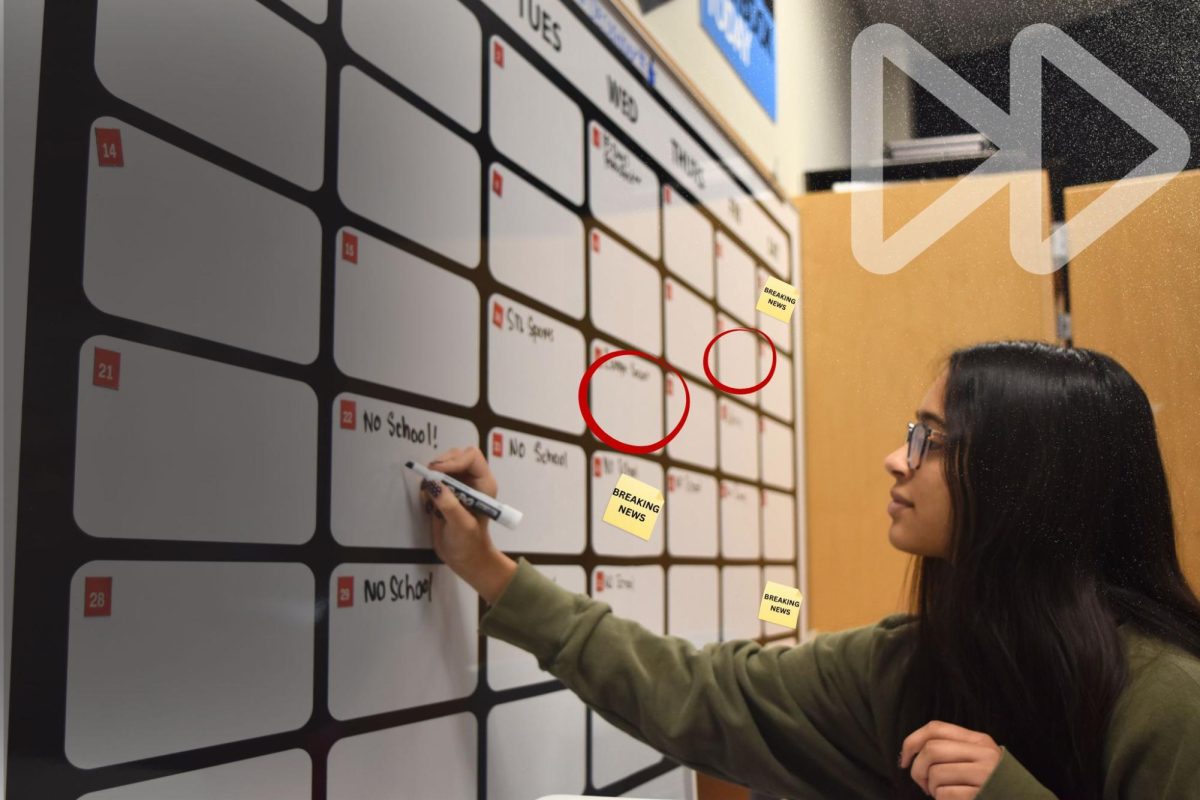
![Dressed up as the varsity girls’ tennis coach Katelyn Arenos, senior Kate Johnson and junior Mireya David hand out candy at West High’s annual trunk or treat event. This year, the trunk or treat was moved inside as a result of adverse weather. “As a senior, I care less about Halloween now. Teachers will bring their kids and families [to West’s Trunk or Treat], but there were fewer [this year] because they just thought it was canceled [due to the] rain. [With] Halloween, I think you care less the older you get,” Johnson said.](https://pwestpathfinder.com/wp-content/uploads/2025/10/DSC00892-1-1200x800.jpg)
![Leaning on the podium, superintendent Melissa Schneider speaks to Parkway journalism students during a press conference. Schneider joined Parkway in July after working in the Thompson School District in Colorado. “My plan [to bond with students] is to get things on my calendar as much as possible. For example, being in [classes] is very special to me. I am trying to be opportunistic [meeting] kids [and] being in [the school] buildings. I have all the sports schedules and the fine arts schedules on my calendar, so that when I'm available, I can get to them,” Schneider said.](https://pwestpathfinder.com/wp-content/uploads/2025/09/IMG_5425-1200x943.jpeg)

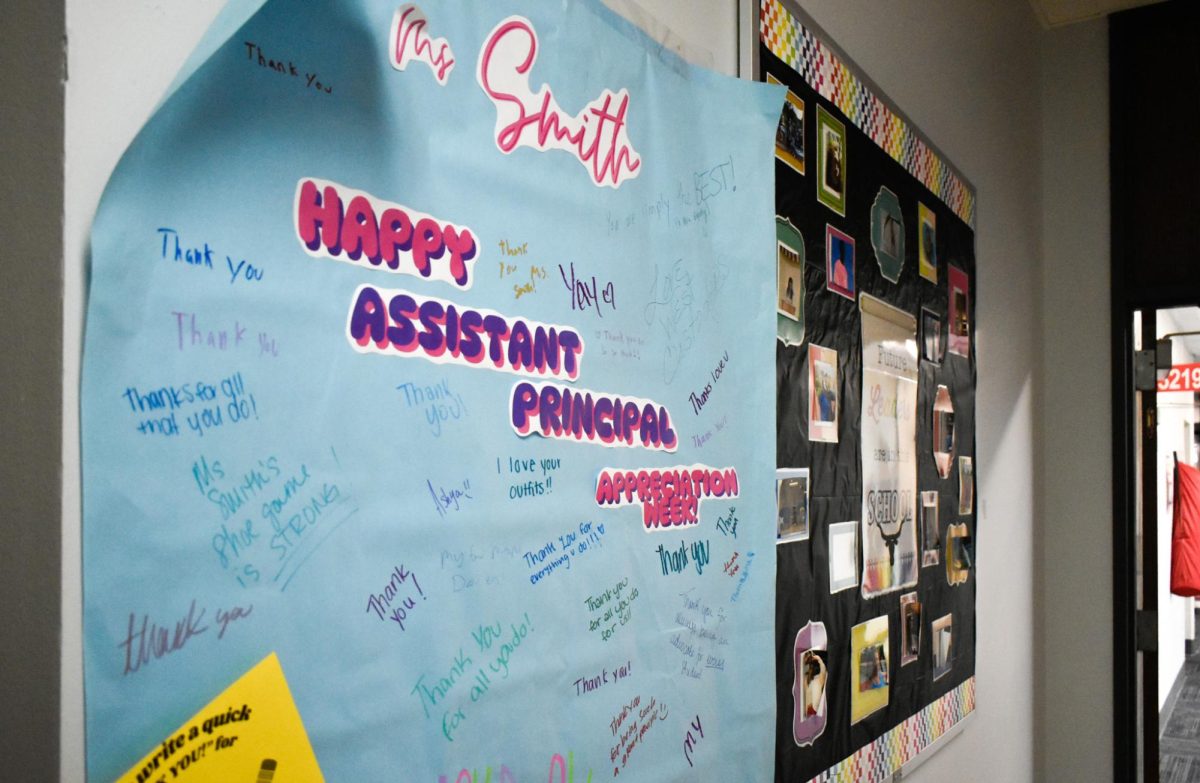
![Red, white and blue, the American flag holds the values of our democracy. The fight that we once endured has returned, as student journalists and senior correspondents across the country are losing their voices due to government control. “[Are] the White House and [the] government limiting free speech [and] freedom of the press? Yes [they are],” chief communications officer of the Parkway School District and former journalist Elisa Tomich said.](https://pwestpathfinder.com/wp-content/uploads/2025/03/Untitled-design-14.jpg)
![Takeout containers and boxes sit unused in the garage of senior Yein Ahn. Her family’s sushi restaurant, 153 Sushi, went out of business in March 2024. Like many restaurants, Ahn’s family experienced the struggle of the restaurant business amidst the lasting economic effects of the COVID-19 pandemic. Business teacher Andy Croley has been teaching his classes about these modern challenges restaurants face trying to adapt to the rapidly changing economy and market. “[The food industry is] super competitive. There are restaurants everywhere you go, so they have to figure out what niche they're going to fill. Then, just like us as consumers, right now at home, where our prices are going, prices [for restaurants] are continuously going up as well. Inflation would definitely be a factor for people as well, because with inflation, [restaurants] are also seeing rising costs in their lease or their rent, electricity and all across the board,” Croley said.](https://pwestpathfinder.com/wp-content/uploads/2026/05/DSC_0004-1200x800.jpeg)
![Laughing, sophomore Julia Adams (right) takes time from her day to let loose and hang out with her friends. Adams, who has received lessons from Parkway’s Peers Advocating for Total Health (PATH) program, has maintained the status of being alcohol free. “Playing sports, [and] being surrounding myself with friends who encourage each other to [not drink] is [not only] helpful, [but] doing these activities is super fun and helps me reach a natural high,” Adams said.](https://pwestpathfinder.com/wp-content/uploads/2026/03/DSC_0029-1200x800.jpg)

![The narrow lens contrasts with a diverse reality; whitewashing means altering or concealing something to make it more appealing to white people. The word “whitewashed” as it is used today has caused identity crises for thousands, if not millions, of students. “I have been called whitewashed before, and it feels very sad. [It’s] just hard because it makes me not know who I am. You don’t get a lot of backlash for [saying it], so I think it’s a throwaway term for people who aren’t affected by it. When you are the person [who] is being called whitewashed, over time, it builds up,” sophomore Raaga Golla said.](https://pwestpathfinder.com/wp-content/uploads/2026/01/IMG_5740-1-1200x800.jpg)
![Reflecting on the hallway artwork titled “Community and Connections,” junior Trent Young is inspired by the unity and belonging showcased at school. This painting was created in 2014 to represent West's diverse population.“Seeing someone of color, [Zohran Mamdani], succeed in politics makes me realize I belong here. It inspires me to get involved within my community [to] make a difference,” Young said.](https://pwestpathfinder.com/wp-content/uploads/2026/01/DSC_0002-1200x800.jpg)
![Playing an informative video about DECA competitions, sophomore Eiley Minich leads the first DECA meeting of the year. Like Minich, senior Tenley Dollarhide is a member of DECA. “I think [DECA is ] important because they provide good personal experiences that relate to your career. I want to do business so I can get actual experience in doing marketing projects, competing with other business students [and] presenting things with an actual business person as a judge. I think it's important to make them more inclusive, because we want to have a diverse population. You need people with different perspectives to bring their perspectives to the table and talk about what people like them they need,” Dollarhide said.](https://pwestpathfinder.com/wp-content/uploads/2025/12/DSC_1446-2-1200x795.jpg)
![During Creative Writing, senior Michael Collop experiments with different poetry styles. For Collop, the class feels like a break from the fast pace of his other courses. “[There is] no stress,” Collop said. “It's definitely a lot more laid back [than an AP class], and it's enjoyable. It's probably one of my favorite classes.”](https://pwestpathfinder.com/wp-content/uploads/2025/12/DSC_4545-1-1200x800.jpg)

![Amid major global conflicts, anonymous social media critics hone in on celebrities, especially female celebrities, every move. Taylor Swift's latest album release and accompanying press tour displayed the uncontrollable growth of cancel culture and the comfort anonymity on social media has created. “[Cancel culture] can be very effective when [it’s used to] speak out against a [person] or a corporation where [you] use your voice or your dollar as a way to send a message about what we accept as a society. [However,] we've really blurred this line where we expect [everyone] to cater to have a belief about every issue. Not one person is going to believe every single thing that you believe as strongly as you believe it," English teacher Michelle Kerpash said.](https://pwestpathfinder.com/wp-content/uploads/2025/11/DSC_7626-1-1200x800.jpg)
![Sitting courtside before a junior varsity girls’ tennis match, senior Tanisi Saha rushes to finish her homework. Saha has found herself doing academic work during her athletic activities since her freshman year. “Being in sports has taught me how to stay organized and on top of my schoolwork. [With] a busy practice and game schedule, I’ve learned to manage my homework and study time better,” Saha said.](https://pwestpathfinder.com/wp-content/uploads/2025/11/DSC_0022-1200x800.jpg)

Will Gonsior • Dec 1, 2025 at 9:23 am
Excellent job R&R! The interviews, calls to action, practical information, and analysis are all on point, plus this is super important. I hope a lot of people get to read this! shoutout to the JCC W summer job