![Days out from annual Advanced Placement (AP) exams, a pencil lies snapped in half, surrounded by a variety of study materials, symbolic of the frustrations accompanying end-of-year exams. AP exams are scheduled to run May 4 - 15, 2026. “I am taking three AP exams this year, [and] I only took one last year. [Last year,] I made sure I got a good rest before my exams; [this week,] I’ve been taking notes on each chapter [from my textbooks],” sophomore Shree Sikkal Kumar said.](https://pwestpathfinder.com/wp-content/uploads/2026/04/DSC9826-1200x798.jpg)
As April comes to an end, students across the country find themselves balancing the excitement of the approaching end of school while simultaneously making the final push to get through Advanced Placement (AP) exams. As stressful as exams may be, many have recently questioned the value and quality of standardized tests in the grand scheme of college admissions and education as a whole.
Despite the annual recurrence of AP tests, the AP curriculum has changed significantly over time. From the tests cutting down on the number of questions to the exam curve shifting, the overall objective of the tests often feels unclear due to score inflation and reduced rigor. With these changes, the AP tests seem to be following the trend of tests getting easier over time, raising doubts about their ability to accurately reflect students’ knowledge and readiness. With a lack of real value, standardized testing feels more like an enterprise than a system meant to help students.
College Board is a not-for-profit organization that aims to create a cohesive system for college entrance exams. The organization controls a majority of standardized testing, including the SAT, PSAT and AP exams, which all play a major role in college admissions throughout the country. For example, College Board’s National Merit Scholarship Program — awarded based on a National Merit Scholarship Qualifying (PSAT/NSMQT) test score — is a significant achievement in the realm of college admissions. Less than 1% of the nation’s high school seniors qualify as semifinalists. If students become finalists, they will have the chance to earn a $2500 scholarship award to an affiliated college or university in the United States. The PSAT 8/9 has also been a commodity in the world of education. For eighth- and ninth-grade students, this test creates a pipeline that continues through high school exams and standardized testing. As for AP exams, students who receive a three, four or five are often able to receive college credit and can be placed into advanced courses at some universities.
Students who take an AP test often go through an AP curriculum. The AP program was created in the 1950s to make a cohesive system where students were encouraged to go to college, with the overall goal of creating a more productive workforce. During those years, it was a prestigious program, with half of Harvard College’s incoming class participating, and selective, with only 14% of high schools offering the courses. Now, around 75% of high schools offer AP exams, with over 3 million students taking an exam in 2024. 2024 set an all-time high of student participation; there was a 10% increase in the number of exams taken since 2023.
Even with significant participation, the overall value of AP Exams has declined for a few reasons. First, score inflation on the tests is causing a gap in knowledge for those who use AP tests for credit at accredited universities. As a result, some private institutions, such as Brown University, do not accept AP scores for credit. These changes can be traced back to 2022, when the College Board transformed how it set score distributions. Before this time, the AP Exam scoring was reviewed by a small group of 10 to 18 college professors and high school teachers every five to ten years, ensuring that the grading scale stayed relatively stable over time. Under the new grading system of Evidence-Based Standard Setting (EBSS), hundreds of college instructors give input as to what proportion of students receive certain AP scores. Since this group is much larger than the previous group, the standards for the scoring system have become significantly lower, as proven by the number of students earning a five, which increased 61% between 2021 and 2025.
In skewing results, College Board has also disrupted AP curricula. AP exams are designed by a group of college professors and high school teachers who create a course framework for classrooms across the nation to follow. Each year, College Board and previous AP teachers research and craft exam questions to ensure that the test is at an acceptable proficiency level for a college-level course. However, these courses go through testing development stages every two to six years, and when these edits occur, they have proven to be impactful.
A significant change occurred during the 2019-2020 school year: AP World History officially changed to AP World History: Modern, shifting the curriculum dates from 8000 BCE to 1200 CE and onward. College Board believed that the previous curriculum was too broad, so they decided to split the class into two parts: a Pre-AP course and the main course, AP World History: Modern. However, many schools have not been able to adopt the Pre-AP course due to large fees, few educators and minimal students willing to take the course due to a lack of college credit. This unwarranted change, extending to several other courses, has forced students in the past six years to study nine units of world history without the prior context to fully understand the coursework.
AP World History: Modern teacher Kristin works alongside Jim Hermann, who noticed this change within their own curricular plans.
“They restructured the entire curriculum, and people that I know who teach it that way say that it’s so confusing [for students]. That’s why Hermann and I have continued [teaching] the way it used to be taught,” Collins said.
While College Board has drastically changed some courses, they have also retained the structure and grading scales for others. Because of this disparity, students taking exams from 2020 and 2025 increasingly received fives in AP in English Literature and Composition, AP United States Government & Politics and AP Biology. Yet, less commonly taken APs like AP Music Theory and AP 3D Art and Design had pass rates that decreased or stayed relatively the same.
AP Music Theory teacher Jacob England has observed minimal change in the AP Music Theory test after AP changed most of its grading system.
“The exam is fairly difficult. I haven’t seen any large changes since I [took] the exam in high school, and the exam is still on paper, unlike many other ones,” England said.
Beyond the inherently flawed grading scales and poor testing values, in 2024, AP exams generated over $200 million in profit. These high profit margins sparked social and legal concerns, with many believing College Board is earning an excessive amount for a not-for-profit organization. In fact, in company improvements, they spent over $8 million dollars paying their executives, with $1.8 million of it going to their CEO. Instead, this money could be put towards expanding their financial needs services to a broader range of students.
Apart from College Board’s own gain, many other companies profit from the College Board’s size. Online resources have emerged claiming that they have a “foolproof formula” to earn a five, the highest score given on an AP exam. Companies like the Princeton Review have started tutoring services starting at $215 an hour. This presents a problem as education becomes a business. Companies are beginning to conceal test resources behind paid packages rather than providing accessible resources. This disadvantages lower-income students who cannot afford such services. The growing emphasis on test formulas and methods doesn’t prioritize actual learning; the skills taught in these lessons often focus more on test-taking strategies rather than the actual content of standardized tests. One of the main reasons for taking AP classes is to prepare students for college, but when the foundational knowledge is not being adequately taught, it may hurt students later on in their journey.
The demographics of AP exam participation also present disparities. In 2022, 30% of Black and Hispanic students enrolled in at least one AP course did not take the corresponding AP exams. Currently, each AP exam taken in the United States costs $99, with additional late fees costing $40. These costs pile up quickly, with nearly 50% of exam takers taking two or more tests. While College Board offers a reduced fee of $37 for low-income students, the overall cost of the exam is still over $50. With a shortage of rural teachers, it’s difficult to provide the same opportunities to study for and actually participate in a standardized test. With a push for more virtual AP courses in recent years, some of these disparate barriers are beginning to be eliminated.
Education should not become a business. While testing is an integral part of student life, it’s unfair for students to solely be used for profit. It is vital to retain a uniform testing and admissions system that provides fair evaluations of students, their course rigor and standardized testing scores. College Board, and other organizations like it, should be held accountable for their lack of transparency, reliability and disparate opportunities. Tests are ultimately made to assess what teachers have taught and what students have learned. When creating, administering, selling and scoring tests, these values should be upheld.
![From March 12 to 23, 38 Parkway School District Latin students and six chaperones journeyed across the Atlantic Ocean to visit Italy. Throughout the trip, students noticed an unusually high level of military presence at the sites they visited. “[It] seems like a lot of people are unhappy with our country’s current foreign affairs [and] foreign policy. I think that affects people's view [of] our country and our people as a whole. [We saw] signs [and] graffiti with anti-American sentiment. I think there's fear all over the world, and people don’t know what's going to happen next,” junior Jackson Stirling said.](https://pwestpathfinder.com/wp-content/uploads/2026/03/march-feature-revised--1200x675.png)
![Students at West High and beyond have shown their commitment to act for change, rather than remaining as passive observers. Yet, along with student activism, the student journalists covering these controversial issues have faced censorship from the government and other institutions. Pathfinder continues to strive to report on difficult topics and provide a platform of information and conversation at Parkway West. Journalism adviser Lindsey Katz teaches about the First Amendment and the rights of student journalists as one of the lessons in Convergence Journalism 1. “Out of all the things we learn in journalism, the takeaway that I want journalists to walk away with the most is having a true understanding of their rights as citizens and their rights as student journalists. By studying the First Amendment, media law and students’ rights, [journalists can] build foundational knowledge of why we do what we do,” Katz said.](https://pwestpathfinder.com/wp-content/uploads/2026/02/feb-2026-feature-1200x678.png)
![Justice. Domestic Tranquility. General welfare. Blessings of liberty. These key phrases have been redacted from this copy of the U.S. Constitution, reflecting the values lacking in the United States' Immigration and Customs Enforcement (ICE). ICE’s behavior suggests that the values instilled in our nation have been stripped. “When you're implementing [immigration enforcement] on a mass scale at the speed it's happening [now], you're bound to see unjust, horrible things. The only way to solve that is to make the crackdowns less severe,” junior Alisha Yin said.](https://pwestpathfinder.com/wp-content/uploads/2026/01/feature-image-jan-2026-1200x710.png)
![Helping to transport cans and other food items from West High’s food drive to the Parkway Food Pantry, sophomore Max Jones carries a box into a truck. Nov. 21 marked the end of West High’s annual canned food drive. “The food drive is a really great opportunity for everyone to get involved in helping a bigger cause. It’s great that [the West community] can make a difference in a big way through this food drive,” Jones said.](https://pwestpathfinder.com/wp-content/uploads/2025/11/DSC_0727-1200x798.jpg)
![Dressed up as the varsity girls’ tennis coach Katelyn Arenos, senior Kate Johnson and junior Mireya David hand out candy at West High’s annual trunk or treat event. This year, the trunk or treat was moved inside as a result of adverse weather. “As a senior, I care less about Halloween now. Teachers will bring their kids and families [to West’s Trunk or Treat], but there were fewer [this year] because they just thought it was canceled [due to the] rain. [With] Halloween, I think you care less the older you get,” Johnson said.](https://pwestpathfinder.com/wp-content/uploads/2025/10/DSC00892-1-1200x800.jpg)
![Leaning on the podium, superintendent Melissa Schneider speaks to Parkway journalism students during a press conference. Schneider joined Parkway in July after working in the Thompson School District in Colorado. “My plan [to bond with students] is to get things on my calendar as much as possible. For example, being in [classes] is very special to me. I am trying to be opportunistic [meeting] kids [and] being in [the school] buildings. I have all the sports schedules and the fine arts schedules on my calendar, so that when I'm available, I can get to them,” Schneider said.](https://pwestpathfinder.com/wp-content/uploads/2025/09/IMG_5425-1200x943.jpeg)

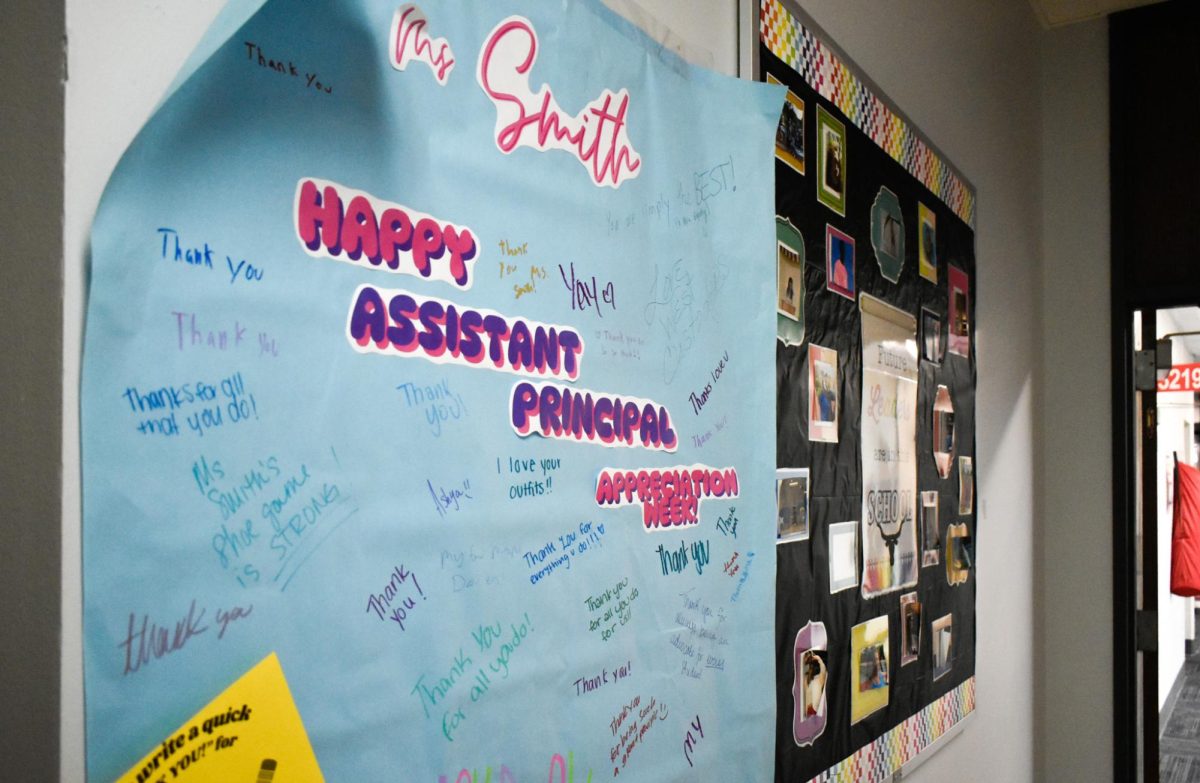
![Red, white and blue, the American flag holds the values of our democracy. The fight that we once endured has returned, as student journalists and senior correspondents across the country are losing their voices due to government control. “[Are] the White House and [the] government limiting free speech [and] freedom of the press? Yes [they are],” chief communications officer of the Parkway School District and former journalist Elisa Tomich said.](https://pwestpathfinder.com/wp-content/uploads/2025/03/Untitled-design-14.jpg)
![Senior Michael Collop stands in the sun at Vlasis Park in Ballwin, Mo. Collop has earned each of the 142 merit badges currently offered by Scouting America, joining the estimated 650 other Scouts who have done the same. Out of roughly 130 million youth who have participated in Scouting, only 0.00077% have achieved this distinction. “The whole point of merit badges is to learn something from them and get a glimpse into every single career or every aspect of [Scouting]. I think I took something from each one of those merit badges that's [going to] be with me for the rest of my life,” Collop said.](https://pwestpathfinder.com/wp-content/uploads/2026/04/DSC7392-1200x798.jpg)
![West High’s girls’ and boys’ track and field school records are plastered next to the gymnasium entrance. In 2023, the girls’ varsity 4x200-meter relay team set a school record — the most recent track and field school record. “[My] freshman year, we almost made it to state. We made it to sectionals but came up short by 0.79 seconds from advancing,” Love said.](https://pwestpathfinder.com/wp-content/uploads/2026/04/DSC_1232-1-1200x800.jpg)


![Amid major global conflicts, anonymous social media critics hone in on celebrities, especially female celebrities, every move. Taylor Swift's latest album release and accompanying press tour displayed the uncontrollable growth of cancel culture and the comfort anonymity on social media has created. “[Cancel culture] can be very effective when [it’s used to] speak out against a [person] or a corporation where [you] use your voice or your dollar as a way to send a message about what we accept as a society. [However,] we've really blurred this line where we expect [everyone] to cater to have a belief about every issue. Not one person is going to believe every single thing that you believe as strongly as you believe it," English teacher Michelle Kerpash said.](https://pwestpathfinder.com/wp-content/uploads/2025/11/DSC_7626-1-1200x800.jpg)
![Sophomore Shree Sikkal Kumar serves the ball across the court in a match against Lindbergh. Sikkal Kumar has been a varsity member of the varsity girls’ tennis team for two years, helping her earn the number two rank in Class 2 District 2.“When matches are close, it’s easy to get nervous, but I [ground] myself by[staying] confident and ready to play,” Sikkal Kumar said.](https://pwestpathfinder.com/wp-content/uploads/2025/11/DSC2801-1200x798.jpg)
![Focused on providing exceptional service, sophomore Darsh Mahapatra carefully cleans the door of a customer’s car. Mahapatra has always believed his customers deserve nothing less than the best. “[If] they’re trusting us with their car and our service, then I am convinced that they deserve our 100 percent effort and beyond,” Mahapatra said.](https://pwestpathfinder.com/wp-content/uploads/2025/10/DSC_0018-1200x800.jpg)
![Sophomore Aleix Pi de Cabanyes Navarro (left) finishes up a soccer game while junior Ava Muench (right) warms up for cross country practice. The two came to Parkway West High School as exchange students for the 2025-2026 school year. “The goal for the [exchange] program is to provide opportunities for both Parkway students and our international exchange students to learn about other cultures, build connections and become confident, capable, curious and caring — Parkway’s Four C’s — in the process,” Exchange Program Lead Lauren Farrelly said.](https://pwestpathfinder.com/wp-content/uploads/2025/10/Feature-Photo-1200x800.png)