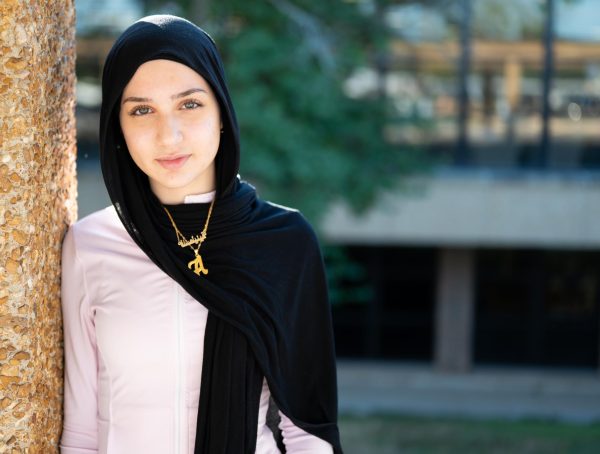
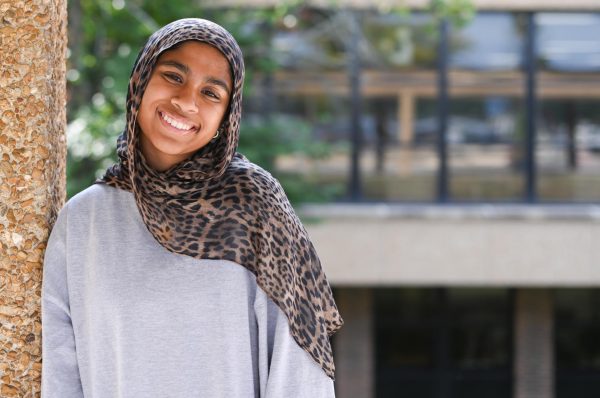
![Twinkling lights glow in homes and neighborhoods as families decorate to celebrate Ramadan and welcome in Eid. Junior Zainab Aljaff reflects on how this holy month shaped her, and how these values continue beyond the holiday. “Eid helps me realize that the things we learn during Ramadan is beyond [the] month. Eid is so exciting because it is a reward for everything that we worked on [during] Ramadan. Being able to share the day with my family made it unforgettable,” Aljaff said.](https://pwestpathfinder.com/wp-content/uploads/2026/03/Screenshot-2026-03-30-at-8.38.05-AM-1200x792.png)
As Ramadan came to an end on the evening of Mar. 19, Muslims around the world gathered to celebrate Eid al-Fitr, marking the conclusion of a month dedicated to fasting, reflection, and growth. While the daily fasts are now over, the impact of Ramadan continues to stay with many on how they approach their faith, relationships and daily lives. While Eid is a celebration, it is also a moment to reflect on the lessons Muslims have learned throughout the month.
Ramadan is a holy month of fasting observed by Muslims across the world. It is observed with the sighting of the new crescent moon and is marked by daily fasting from sunrise to sunset throughout the month. Muslims wake up early in the mornings for suhoor, the pre-dawn meal eaten to stay full and hydrated throughout the day. At sunset, they break their fast with iftar, often starting with dates and water to follow the Prophet Muhammad’s tradition. While these routines are very important, Ramadan is more about a time to improve one’s spiritual reflection and increase one’s devotion.
After a month full of discipline and worship, Eid is the reward and a celebration for the effort. On the morning of Eid, Muslims attend a special prayer, wear their best clothes and spend time with loved ones. Traditions vary across cultures, but many include giving gifts, cooking a meal, visiting family and donating to charity. The holiday highlights appreciation not just for food but also for Allah, who is God, and for the strength and ability to complete a full Ramadan.
“During Ramadan, Muslims [try] to become a better version of themselves. Obviously, Muslims fast, but it’s more than just not eating or drinking. It’s about trying to become a better Muslim, leaving our bad habits behind and [learning] how to cope with building better ones. By the time Eid come it feels like a reward for everything that you worked on throughout the month,” junior Eshaal Haq said.
For many students, balancing Ramadan with school and other responsibilities can be difficult. The hunger and fatigue throughout the day can be challenging, but the purpose behind fasting, which is growing their connection towards God and strengthening self-discipline, can help students stay motivated. This motivation often carries over into Eid, making the celebration feel even more meaningful.
For non-Muslims, Eid can be a time of inclusion and of understanding. As more students learn about Ramadan and Eid, they can support their fasting peers.
“Since I do [have] a lot of friends who practice Ramadan, I understand that it is a month where one can’t eat from sunrise to sunset, but [I] realized that it is more about getting closer to God and finding a connection with Him. I want them to feel included in our school and be able to boost their confidence with fasting. Being able to see them go through that makes Eid seem [like] a deserved celebration,” junior Trent Young said.
The growing awareness in our community has helped create a more inclusive environment. Clubs like the Muslim Student Association (MSA) at West provide a space for students to share their experiences and build community. MSA encourages others to become more informed and respectful through events and open discussions that help break down stereotypes and build connections across different backgrounds. School accommodations, such as allowing time for daily prayers, have made a difference for students observing Ramadan. This has helped students balance their religious and academic responsibilities and feel comfortable and understood in a school setting.
By learning more about Islam and the practices of Ramadan, we can challenge the stigmatized perceptions, allowing for a more accurate understanding of who Muslims really are. Making simple efforts, such as acknowledging Eid and learning about its significance, can have a meaningful impact.
Although Ramadan has come to an end, its reminders don’t stop with Eid. Eid on its own is considered a day of joy, but it is also a day of reflection. After a full month focused on empathy and acknowledgement, Muslims carry these lessons with them beyond Ramadan.
Eid serves as a reminder to carry our values forward. The lessons we learned throughout the month allow Muslims to realize how much they need Allah in their lives. As students return to their normal everyday routines, the experience of Ramadan stays with them as a source of growth and continued faith.
“Even though Ramadan is over, I feel like I have [grown] as a person. Eid was a celebration, but it reminded me to keep the same mindset. I am very grateful that the month is connected to my faith. I hope that I am able to hold onto that mindset even though it is over,” junior Eshaal Haq said.
![Setting up the activity for his first meeting, Financial Literacy Club founder and sophomore Yash Bandiananthaiah writes on the whiteboard. For the first meeting, Bandiananthaiah created an interactive experience for members to immerse themselves in. “To me, the most important thing during a meeting is to make sure we are all engaged and participating, and [I do this by] always making sure we have a hands-on activity,” Bandiananthaiah said.](https://pwestpathfinder.com/wp-content/uploads/2026/05/DSC5306-1200x798.jpg)
![French teacher Blair Hopkins enters City Coffee & Creperie in Clayton, Mo. for breakfast with her Honors French 4 students and AP French 5 students. Both classes went on a field trip to a fair trade chocolate factory in St. Louis to begin their unit on Côte D’Ivoire, a major producer of cocoa beans. “My ideal school would just be the Magic School Bus — you would always learn about things by going someplace and learning hands-on, being able to see it yourself and asking people questions. I think [learning is] always so much more memorable if you can experience it firsthand,” Hopkins said.](https://pwestpathfinder.com/wp-content/uploads/2026/05/DSC2795-1200x798.jpg)
![Dressed in the traditional uniform of the US Air Force, sophomore Eric Thomas stands in front of the US flag. Thomas joined Civil Air Patrol on Jan. 14, 2024, and has since risen rapidly through the ranks. He is currently at the position of Chief Master Sergeant. “Not everybody gets a chance to wear a uniform as prestigious as [the] United States Air Forces[‘]. Having the ability to wear it is truly an honor, [because] it lets me represent some of the core values that I am required to uphold while in the program," Thomas said.](https://pwestpathfinder.com/wp-content/uploads/2026/04/DSC_0003-1200x798.jpg)
![Smiling at her teammates, freshman Angela Diosdado works on her state robot. As a freshman and mechanic for the robotics team, the Blue Brains, Diosdado’s dedication has already been contributing to the team’s success. “[State] was really fun and we did pretty good, [but now] we really have to focus on Worlds. I know that our teamwork and [the fact that we have each other’s backs] will make [our goals] happen,” Diosdado said.](https://pwestpathfinder.com/wp-content/uploads/2026/04/DSC_4717-Enhanced-NR-1200x800.jpg)
![Senior Michael Collop stands in the sun at Vlasis Park in Ballwin, Mo. Collop has earned each of the 142 merit badges currently offered by Scouting America, joining the estimated 650 other Scouts who have done the same. Out of roughly 130 million youth who have participated in Scouting, only 0.00077% have achieved this distinction. “The whole point of merit badges is to learn something from them and get a glimpse into every single career or every aspect of [Scouting]. I think I took something from each one of those merit badges that's [going to] be with me for the rest of my life,” Collop said.](https://pwestpathfinder.com/wp-content/uploads/2026/04/DSC7392-1200x798.jpg)