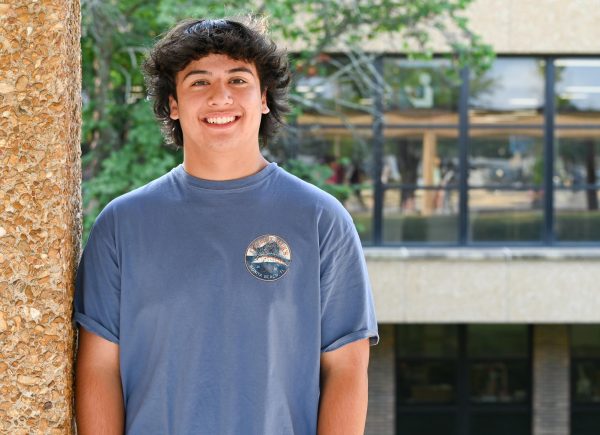
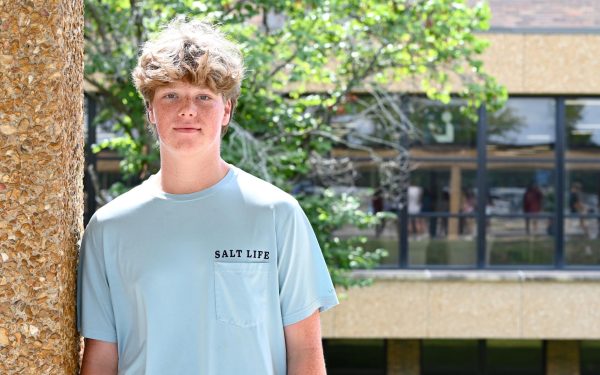
Junior Sam Mouser: I’m Sam.
Junior Ryder Williams: And I’m Ryder, and this is Athletes of West.
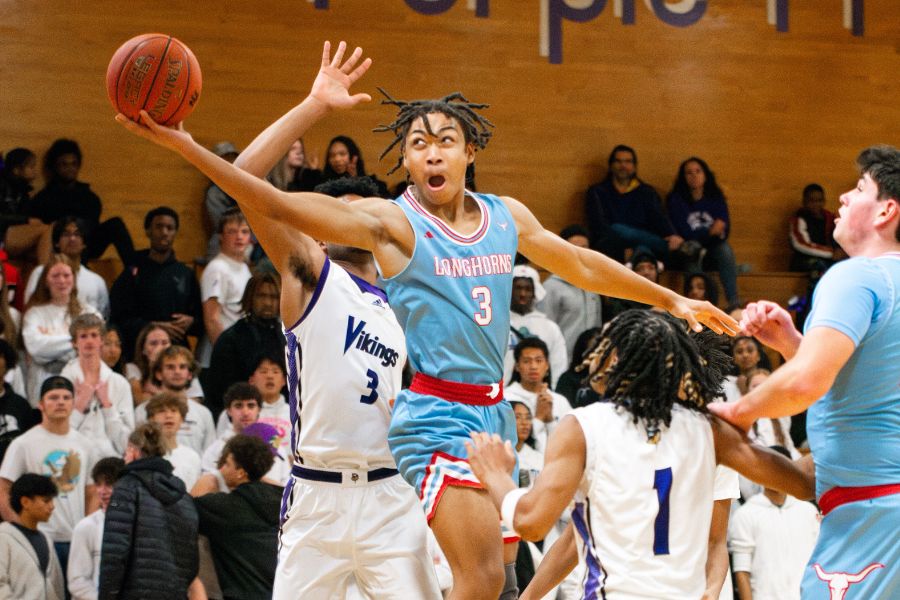
Mouser: Today, we had a chance to talk to sophomore Jamal McNeal about his basketball career leading up to today.
Williams: Who introduced you to the game?
McNeal: I’d say my mom. Growing up, watching her play basketball in the women’s league, or even watching her highlights from when she used to play at Parkway West, and that really wanted me to play, or just LeBron James in general.
Mouser: When was the first time you felt that you were passionate about basketball?
McNeal: I’d say when I was about eight or nine years old. We had a little league, and I remember always being the better one, but I also had to play against other better competitors. I remember they were on the verge of winning, and then I just locked in and came out with the victory on top.
Williams: So what was basketball like as a kid? Did you just do it for fun, or was it more of something you were serious about? At a young age, did you know you were serious about it, or did you just do it for fun, just to mess around?
McNeal: To me, basketball was always everything, especially in middle school, when I would always have to travel to go play at tournaments and miss a lot of days of school, not even being able to hang out with friends or you know, go wherever else. I’d just be in the gym playing basketball because I really knew, at the end of the day, this is what I always wanted to do.
Mouser: All those practices you did by yourself — did that shape you into how you are today?
McNeal: All those practices I had with myself really got me better and pushed me to be who I am today — to really, you know, get my shot. I’ve still had to practice by myself to this day, but really, it pushed myself to be a better player and really show how I’ve really been working.
Williams: With these practices by yourself, did you face any challenges?
McNeal: Yeah, I did face a lot of challenges. I’d doubt myself when I see myself missing, or when I missed or wobbled. When I missed threes or free throws, I always got down on myself and always wanted to quit and not play anymore. I had to snap out of it and just really just say, ‘I can do it, I can play,’ and I can be better than everyone in the state, and just hoop and be better.
Williams: When you’re at your low, what’s your point to get you back in your groove?
McNeal: When I’m at my lowest, I really just try to watch old highlights to show how good I was when I was in the right mindset. To really put me back into that mindset. And then I’d say when I was at my lowest, I always found a game or a day to put me at my highest. And just go on from there.
Williams: Yeah, that’s solid. I like that
Mouser: I know you said you looked up to your mom, but were there any other players in the [National Basketball Association] (NBA) you looked up to?
McNeal: I’d say LeBron, back when he took the Cleveland Cavaliers in 2018, when he had no help, no superstars and no one to, you know, sit out. He played all 82 games and took that team to the championship. He still came up short, but it was still a legendary run.
Williams: Talking about your childhood, do you have any stories you would like to share with us?
McNeal: I’d say I’ve got this one story from seventh grade, when we played the number one seventh grader in the country. It was a wild game. It was a packed game. I was nervous and didn’t think I was going to be able to do anything. When that ball went in that air, I had to guard a 6-[foot]-9 seventh grader because the whole team was 6-[foot]-4, 6-[foot]-6, 6-[foot]-5 and 6-[foot]-9. I was always the big man in middle school, so I had the gaurd the tallest player. And there were possessions where I had to guard the number one player. He didn’t really score, but he still had some tough buckets. I had to play against the best team with 6-[foot]-8 and 6-[foot]-9 players in seventh grade. We came up short, but the way we were able to push and battle, and still make it a close game, it was neck and neck, and it was anyone’s game until the last two minutes. I did play that whole game, and it really showed my character and how I can still battle with the big dogs and still maybe come on top, or still defend them really well and still make a name for myself.
Mouser: Going from eighth grade to your first basketball year in high school, freshman year, what do you think changed most in your game?
McNeal: I would say having to play two different positions. I grew up always playing the big, always posting up, never really dribbling or never really shooting. The big leap I had to take was coming from the big man to having play guard position. It was really tough for the first month. For the first month, it was really tough. I didn’t think I was going to be able to do it until I actually had to push myself to be better. And you know, watch certain guards and certain high school guards, and even have to train with other talented high school guards to be better and push myself to be the guard I am today.
Williams: So, going from middle school to freshman year, you were on varsity freshman year, correct?
McNeal: Yes, I was.
Williams: How was the competition? Was it harder?
McNeal: It was very rough. The fact that, you know, we had to play a lot of good seniors, and every game we played, someone was either averaging 19 [points per game] or above. One game that really sparked me that it was going to be a rough year was the Webster game. It might be embarrassing to admit, but we got 50-balled. Really bad. We had to play five-star Scottie Atkinson and then Miles Simpson. They really showed us how much competition and how much better we can be if we push ourselves to be better.
Williams: What were your thoughts as a freshman? Obviously, freshman year, you were on varsity. And you’re all of a sudden playing against 18-year-olds. Did that scare you? Did you feel pressured to prove yourself?
McNeal: I wasn’t really scared becausein middle school, when I did play with my club team, we always played up two grades or one grade in St. Louis. Playing two grades up was always good competition for us in St. Louis, because we knew we had to play older dudes. I wasn’t really afraid and think I had to prove myself. But I still wanted to make a name for myself as a freshman, to you know say, ‘Hey, I’m still here, and I’m still good as everyone else, and you don’t have to overlook me.’
Mouser: Yeah, I like that. Do you remember a time when you felt on top and felt like you’ve achieved greatness?
McNeal: I’d say the summer of last year, going into sophomore year. We won the championship — a Made Hoops championship. We beat the top Canada team in our grade, we beat the best team in Canada as our grade to get to the championship, and that’s when I felt we won. I felt greatness and felt on top. I haven’t always felt on top, really, but I know there were games when I was at my best, and I’ve been on top of everyone.
Williams: Obviously, this transition was hard. How did coaches, family, and teammates impact your confidence from eighth to freshman year?
McNeal: The one good thing I have to say is respect to [boys’ varsity basketball coach and history teacher John] Coach Wright and Coach P. They pushed me very hard to have the discipline and skill I have now and to always push me to be better because they always saw something in me. I really thank them for that. I also thank my AAU coach, Coach Reggie, for also pushing me to be better and also still have that little guard mentality I had as a middle schooler and a big. But also pushing me to be better than everyone else.
Williams: It’s early in the season so far. And what ways did you grow most from freshman to sophomore year? What was the big difference in your game of play?
McNeal: I try to take more leadership and accountability for, you know, my actions. I’d say I took a big leap. There are some areas I can improve on a lot. I’d say we’ve seen better, and we just, you know, have to overcome some obstacles in our journey.
Mouser: Going from freshman year to sophomore year again, how have your roles changed on this team?
McNeal: I’d say coaches and my teammates have a lot more trust in me to sometimes take over games. Sometimes we have positive outcomes, and sometimes my shots don’t really fall. I still have to get on myself and my body language, but I’d say they trust me with a leader role to really lead the team to victories.
Williams: Throughout this, obviously, there’s been low spots. Would you have any youd like to share?
McNeal: There were some games when my shot wasn’t falling, with stupid fumbles, and my body language would go down. And coaches would get on me and say ‘everybody is always watching.’ To get to the next level, I have to fix my body language and fix my mental. So I always know when I make a mistake next play on, next-play mentality and always keep my body language positive because everybody is going to feed off that body language. I stay positive. Even if my shots aren’t falling, I can find another way to impact to help the team move— getting rebounds, playing good defense, getting others open — and then the shots may fall later in the game.
Mouser: If you could talk to your eighth-grade self right before you go to your freshman year, what would be some words you would say?
McNeal: I would tell my eighth-grade self to always stay locked in, always stay in the gym and don’t really worry about outsiders or always trying to impress people. Some people like to say ‘drop 30 today,’ but realistically, it may sound good, but realistically, it may nothappen. But, I’d tell myself to stay positive in the game and not drop my head when things don’t go my way.
Mouser: Thank you.
Williams: Thank you for listening to this episode of Athletes of West.
Mouser: Make sure to keep an eye out for No. 21 on the Parkway West basketball team.
Music Credit: Thanks to Soundtraps and Jetsonmade – Spark Up 02 for the audio provided in the podcast.


![Stepping up to the tee box, junior Connor Boles lines up his shot before teeing off on the first hole at the Ballwin Golf Course. The team took on the Northwest High School boys’ varsity golf team on Mar. 24. “Golf [is] a sport where I get to feel free; it takes everything off my mind for a couple of hours,” Boles said.](https://pwestpathfinder.com/wp-content/uploads/2026/04/DSC8040-e1776864425510-1200x792.jpg)

![In perfect shooting form and with eyes on the rim, junior Tyler Kuehl is about to shoot his next basket in the last game of the season against Marquette High School. Kuehl has been playing basketball since he was 5. “Even though I played basketball all my life, the game-winning shots can be pressure, it's confidence. If you're going into that shot and not thinking that you're gonna make it, it's obviously not going in. And if you believe, [it will]. That's the only way you can succeed,” Kuehl said.](https://pwestpathfinder.com/wp-content/uploads/2024/01/unnamed-32-1-1200x1200.png)